Crested Gecko: Complete Care Guide for Beginners
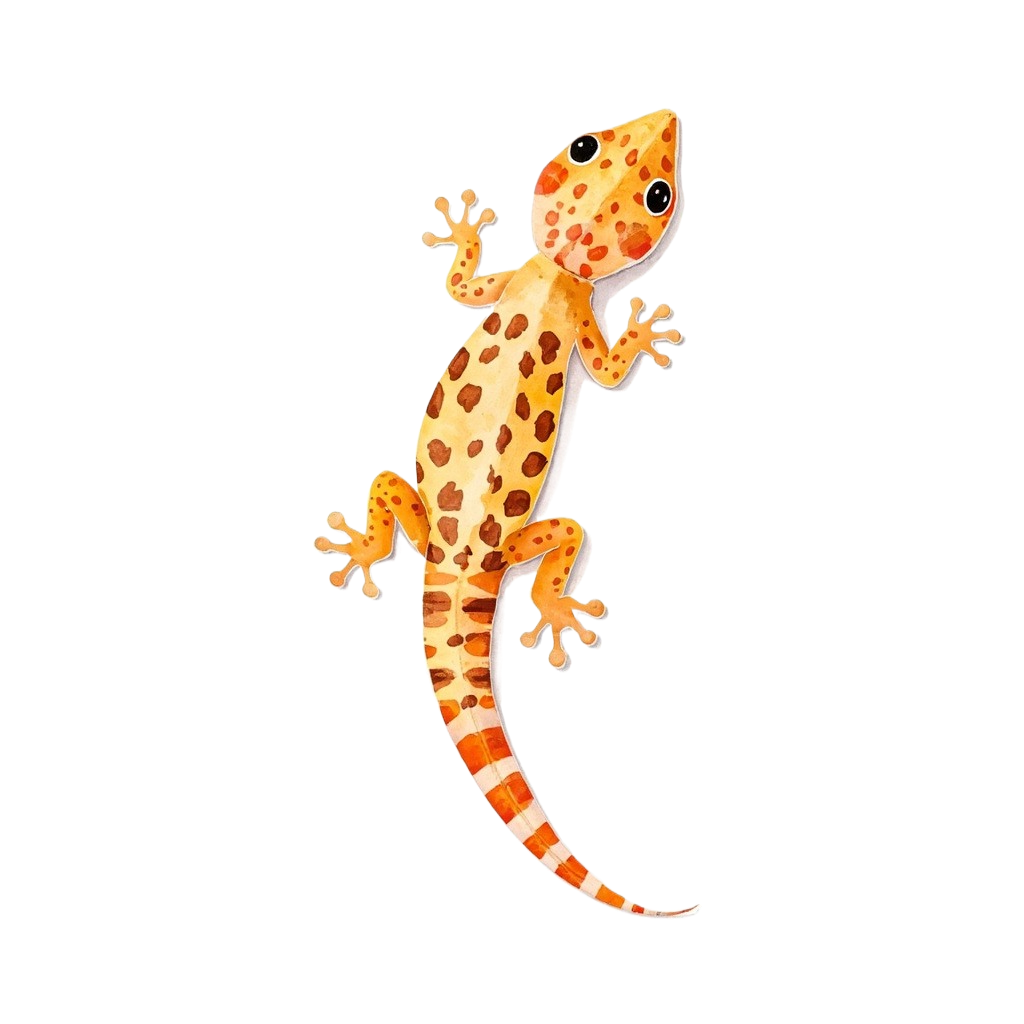
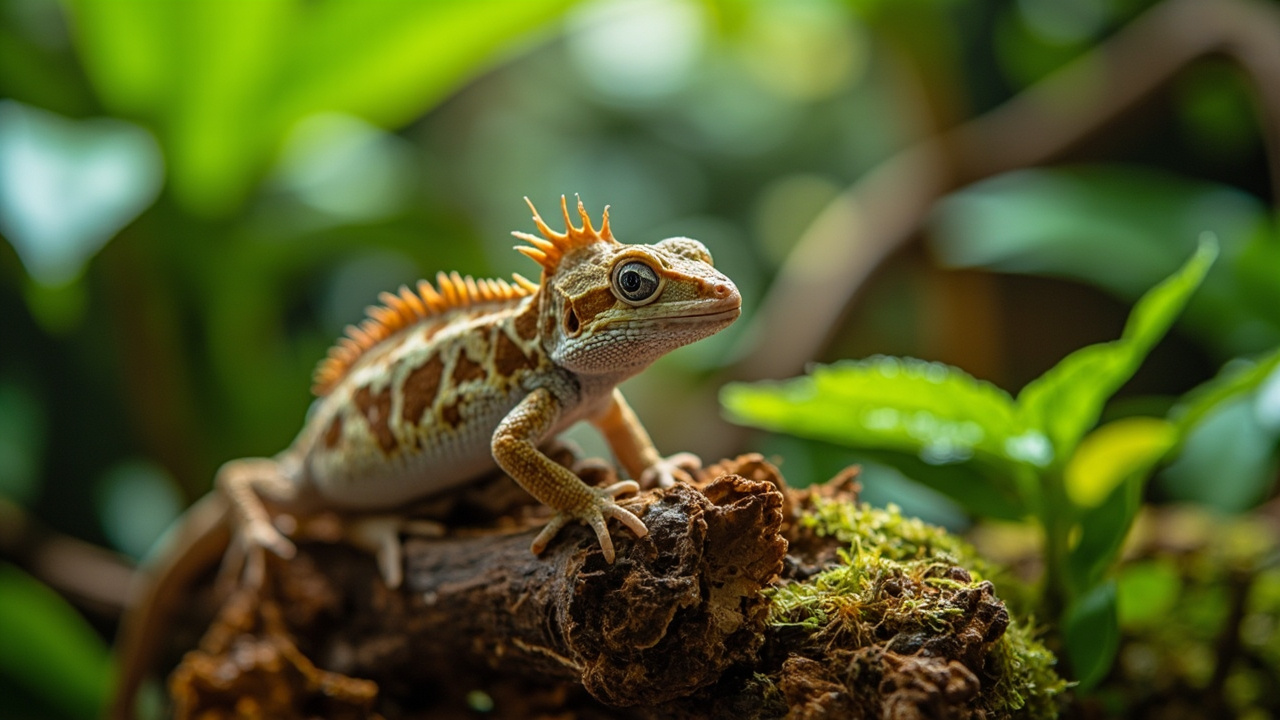
The crested gecko (Correlophus ciliatus) is a small arboreal lizard native to the tropical forests of New Caledonia, an island group in the South Pacific. They get their common name from the distinct row of spiked scales running from each eye to the base of the tail — like eyelashes — and their secondary nickname, “eyelash gecko,” refers to the same feature.
What makes crested geckos remarkable is their rediscovery story. The species was first described in 1866 and then thought to be extinct for over a century until a single specimen was found during a 1994 expedition to the Isle of Pines. Within a few years, captive breeding programs turned them into one of the most widely kept pet reptiles in the world.
Crested geckos are an excellent choice for first-time reptile keepers. They do well at room temperature (no expensive heating setups needed in most homes), eat a simple powdered diet, and tolerate gentle handling. They are nocturnal, so you will see them most active in the evening and at night — perfect for people who work during the day. With proper care, they live 15–20 years.
At a glance:
- Enclosure: 18”x18”x24” vertical minimum
- Temperature: 72–78°F (no special heating needed in most homes)
- Humidity: 60–80% (mist 1–2x daily)
- Diet: Pangea or Repashy CGD 3x/week + insects 1x/week
- UVB: Not required (optional low-level beneficial)
- Lifespan: 15–20 years
Enclosure Setup
Tank Size
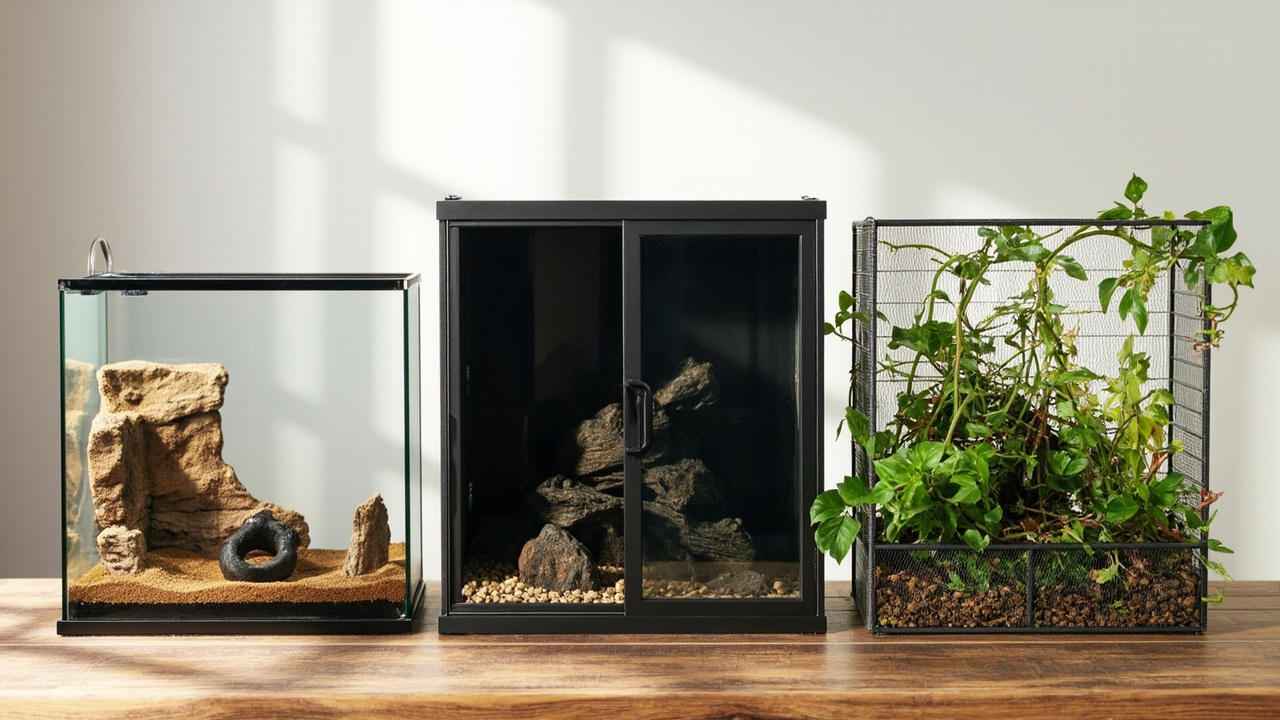
An adult crested gecko needs a minimum 18”x18”x24” vertical enclosure — roughly 20 gallons. Height is the critical dimension because crested geckos are arboreal climbers that spend most of their time above ground level. Taller enclosures (18”x18”x36”) are even better and give your gecko more vertical territory to explore.
Hatchlings and juveniles can start in a small kritter keeper or 5-gallon enclosure and move into the full adult setup at around 4–5 months of age. The REPTI ZOO 30 Gallon PVC Tall Reptile Tank ($161.49) measures exactly 18x18x24 with front-opening sliding doors, top screen ventilation, and a PVC build that holds humidity better than glass. For help choosing between enclosure types, see our terrarium buying guide. Use the tank size calculator to compare dimensions across brands.
Temperature
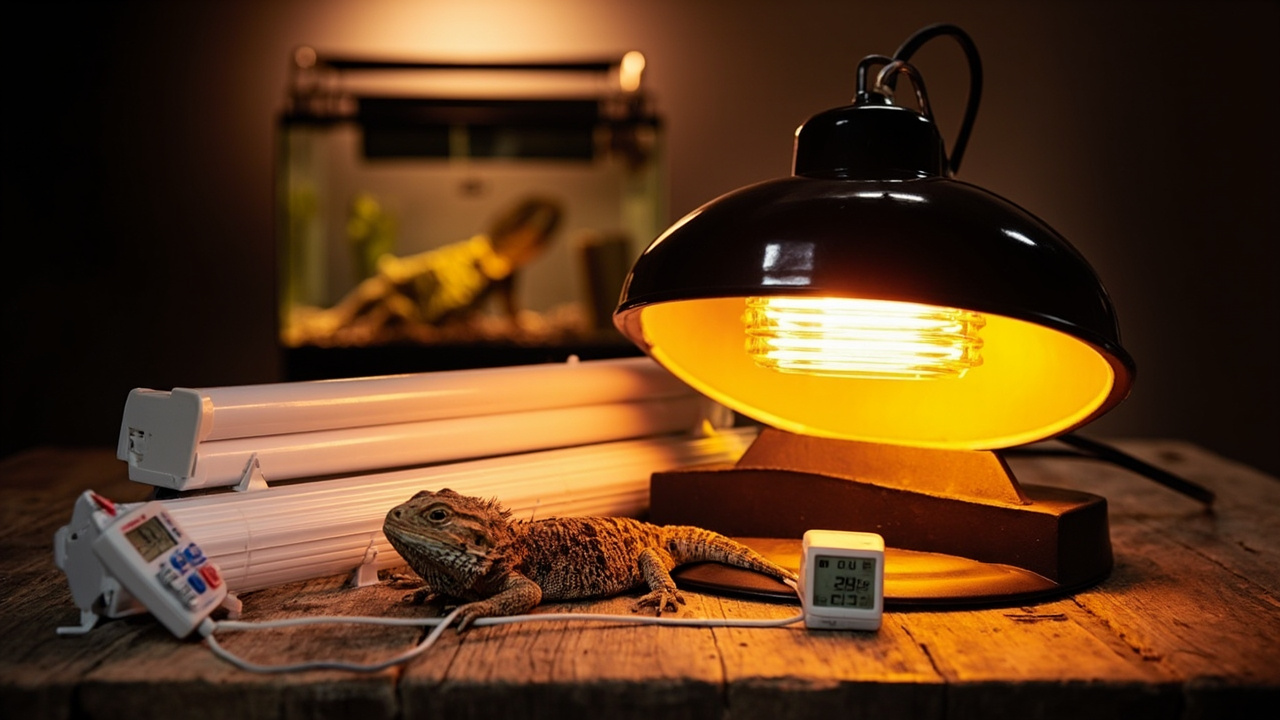
One of the biggest advantages of crested geckos over species like bearded dragons or leopard geckos is their temperature tolerance. They are comfortable at normal room temperature: 72–78°F during the day and a natural drop to 65–72°F at night. In most homes, no supplemental heating is required.
If your room consistently drops below 65°F (common in winter in northern climates), a small iPower Reptile Heat Pad ($8.49) mounted on the side of the enclosure can help. For arboreal species, side mounting works better than under-tank placement because the gecko spends its time climbing on the walls and branches. See our heat mat guide for safe installation practices.
Avoid temperatures above 82°F for extended periods. Crested geckos overheat easily and can become stressed or lethargic. Keep the enclosure away from direct sunlight and heat vents.
Humidity
Humidity is the parameter you need to monitor most closely. Crested geckos need 60–80% relative humidity, with spikes to 80–100% during misting sessions to support clean sheds. Inadequate humidity causes stuck shed, especially on toes and tail tips, which can lead to lost digits over time.
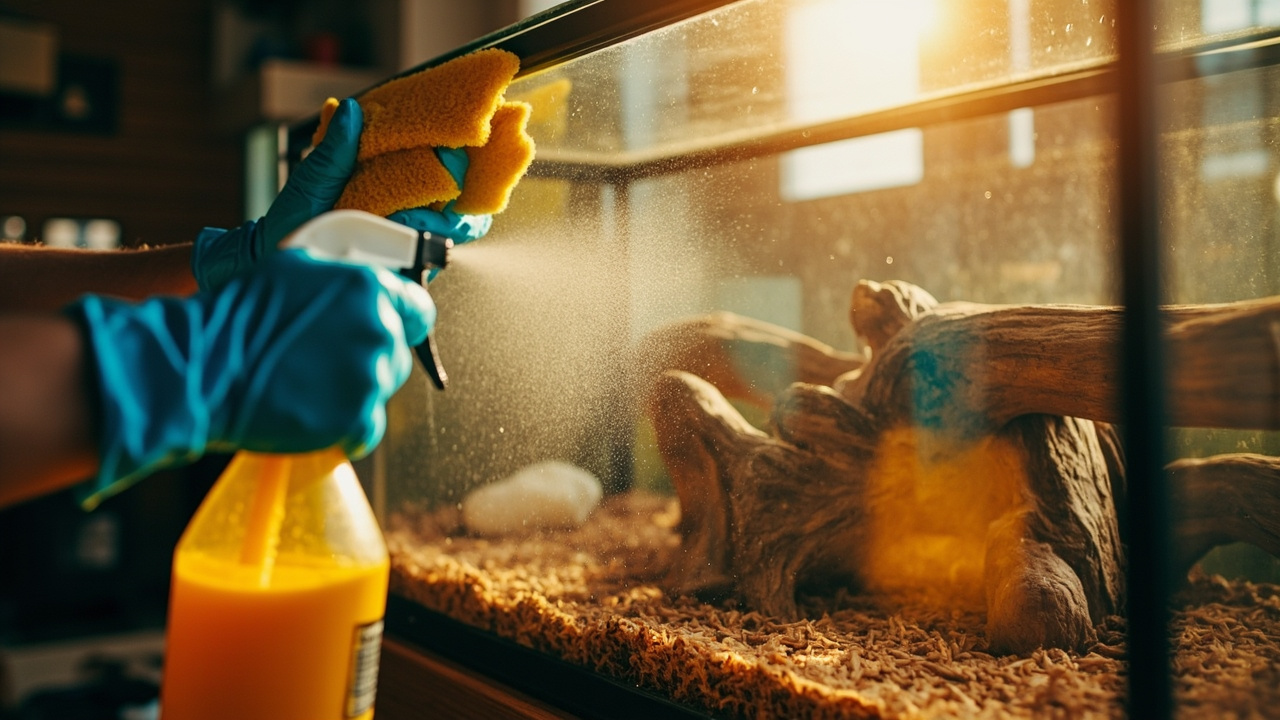
The simplest approach is manual misting with the Exo Terra Mini Mister ($8.53) once or twice daily. Mist the enclosure walls and plants — the gecko will drink water droplets from surfaces. For keepers who travel or want more consistency, the Coospider 3.8L Reptile Fogger ($49.99) provides automatic fogging on a timer.
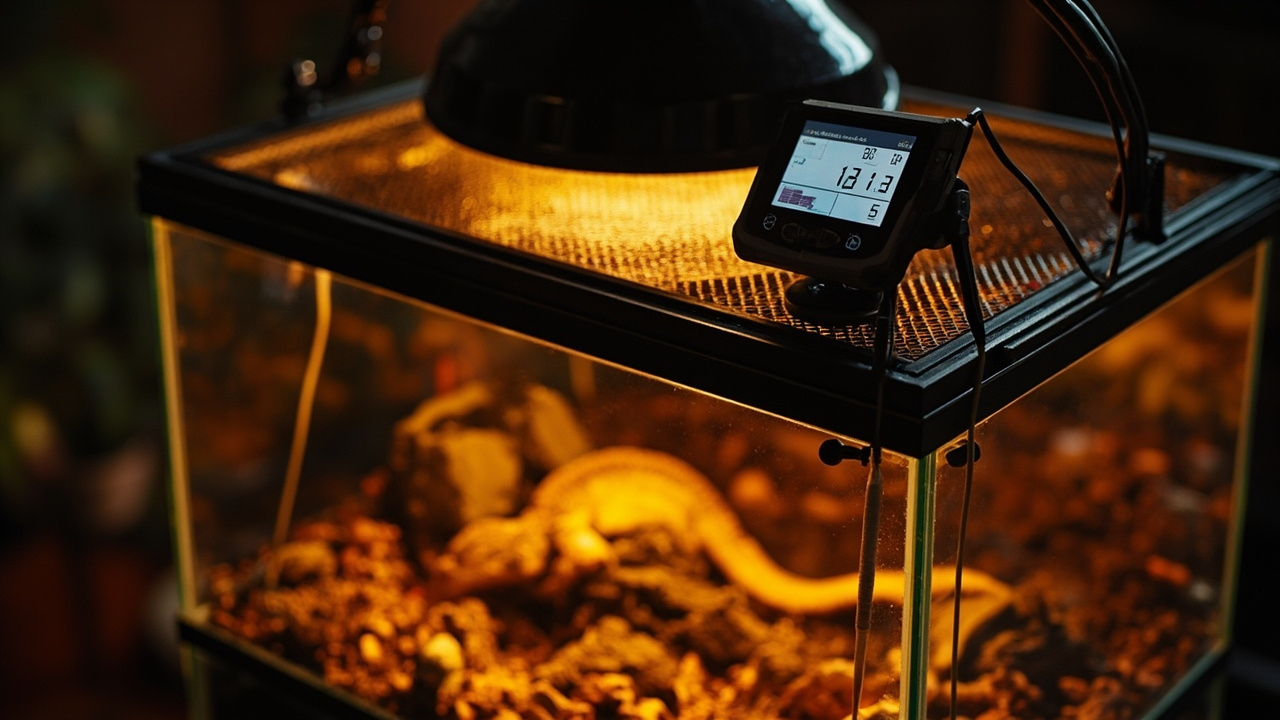
Place the Vodolo Reptile Thermometer and Humidity Gauge ($5.99, 2-pack) in both the upper and lower zones of the enclosure — humidity varies between the ground and canopy levels in a vertical tank.
Substrate
For hatchlings, use paper towel only. This prevents impaction from accidental substrate ingestion and makes monitoring waste easy.
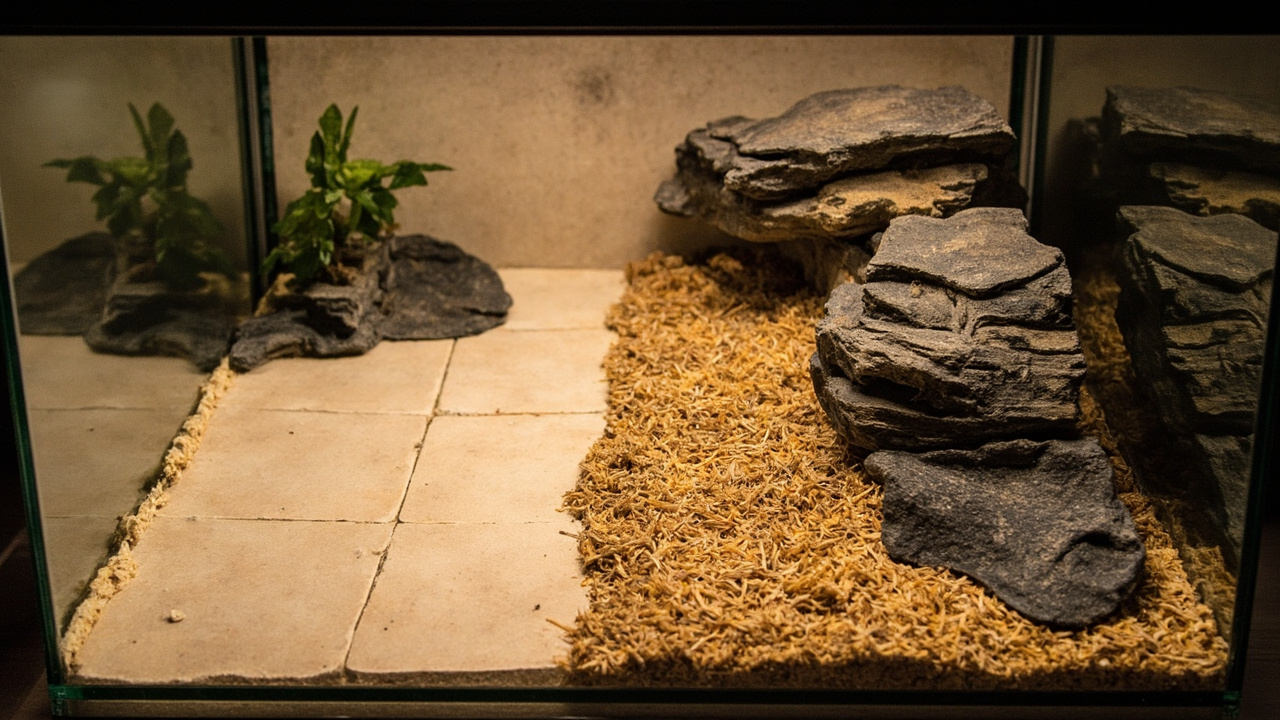
For adults, coconut fiber like Zoo Med Eco Earth ($31.49, 2-pack) is the standard choice — it retains humidity well and has a natural appearance. Our substrate guide covers additional options.
Avoid loose sand, gravel, cedar, and pine — all carry impaction or toxicity risks.
Decor and Climbing
Crested geckos need vertical structure. Add natural wood branches ($29.99) positioned at varying angles to create climbing routes from bottom to top. Cork bark rounds, bamboo poles, and magnetic ledges all work. Provide at least two hiding spots — the Zilla Rock Lair Naturalistic Hide ($37.81) works well as a lower hide. Artificial plants add cover and make the enclosure look more natural while providing additional climbing surfaces.
Diet and Feeding
The crested gecko diet is one of the simplest in the reptile hobby thanks to commercial complete diets.
Crested Gecko Diet (CGD) — The Staple
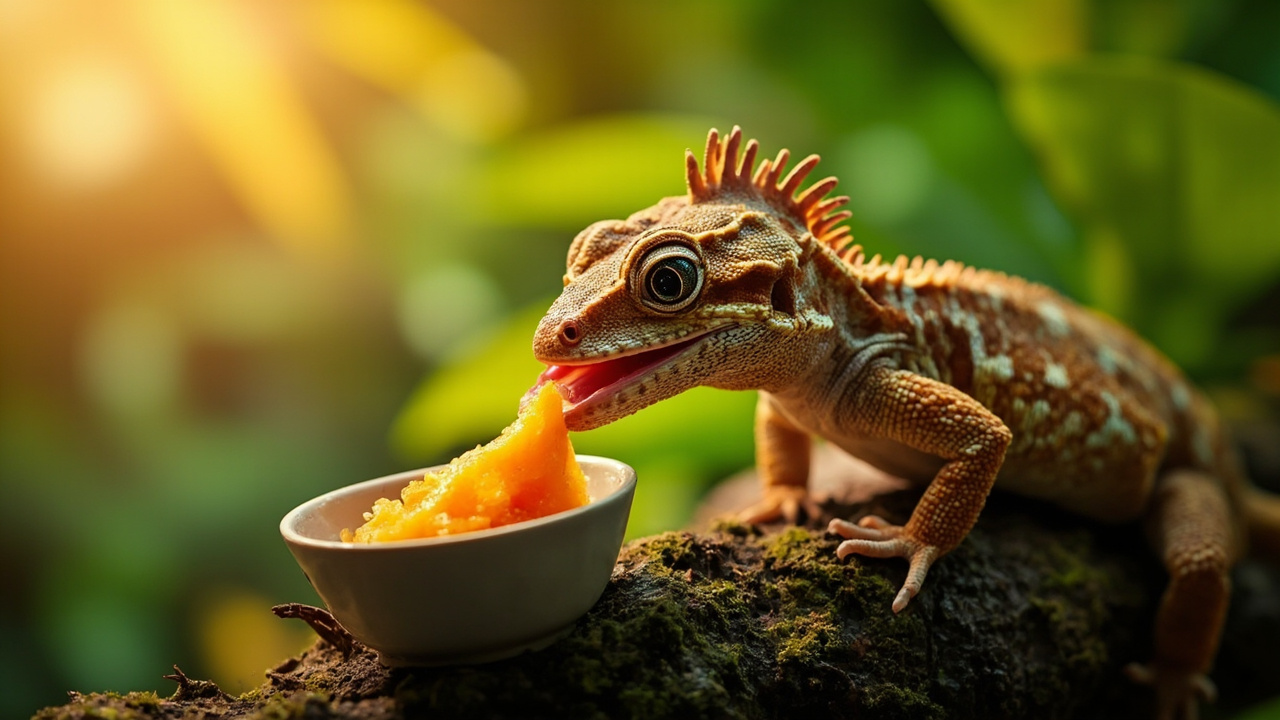
Pangea Complete Gecko Diet ($20.99) and Repashy Crested Gecko Diet ($20.99) are the two leading brands. Both are nutritionally complete powdered diets that you mix with water — no live insects required for the staple feeding. Offer CGD three times per week in a small food cup. Rotate between flavors (watermelon, banana, mango, apricot) to maintain feeding interest.
Serve the diet on a wall-mounted feeding ledge. The Pangea Silicone Gecko Feeding Ledge ($19.99) mounts with magnets and includes a small cup, or the REPTI ZOO Magnetic Ledge ($15.99) comes with six cups for food and water.
Live Insects — Weekly Supplement
Offer live crickets or dubia roaches dusted with calcium once per week. Insects provide enrichment and mental stimulation that CGD alone does not. Gut-load the insects for 24 hours before feeding with carrots or commercial gut-load. Remove uneaten insects after 15–20 minutes to prevent them from bothering your gecko.
What to Avoid
Never offer citrus fruits (oranges, lemons, grapefruit), fireflies, wild-caught insects (pesticide risk), or avocado. Safe fruit treats in very small amounts include banana, mango, apricot, and peach — but CGD should make up at least 80% of the diet.
Replace uneaten CGD after 24–36 hours. In warm, humid enclosures, leftover diet can grow mold quickly. Wash the feeding cup between each serving.
Common Health Issues
Stuck Shed
The most common health problem in crested geckos. Inadequate humidity during shedding cycles causes skin to remain attached, especially on toes, tail tips, and around the eyes. Left untreated, retained shed constricts blood flow and can cause toe loss. Increase misting frequency and provide a humid hide during shed cycles. For stubborn retained shed, a shallow lukewarm soak can help — but if it doesn’t resolve after a few days or the toes start swelling, see a reptile vet.
Metabolic Bone Disease (MBD)
While less common than in species requiring UVB, MBD can still occur if the diet is unbalanced. Symptoms include rubbery jaw, swollen limbs, and difficulty climbing. Feeding a quality CGD as the dietary staple (rather than baby food or fruit-only diets) virtually eliminates this risk.
Floppy Tail Syndrome
A condition where the tail droops sideways rather than curling upward, often caused by insufficient vertical climbing surfaces during development. Juveniles housed in enclosures without adequate height and climbing structure are most at risk. Providing proper vertical territory from the start prevents it.
Medical Disclaimer: This article is for informational purposes only and does not replace professional veterinary advice. If your reptile shows signs of illness, consult a qualified reptile veterinarian immediately.
When to See a Vet
Consult a reptile-experienced veterinarian if your gecko shows any of these signs for more than a week: refusal to eat (especially refusing CGD), weight loss visible in a thinning tail, swelling in limbs or jaw, difficulty climbing, or discharge from the eyes or mouth. Budget for routine and emergency care using the setup cost calculator. For a detailed lighting walkthrough, our lighting and heat setup guide covers fixture installation for multiple species.
Behavior and Handling
Natural Behavior
Crested geckos are nocturnal — most active after lights out. During the day they sleep wedged against branches, leaves, or enclosure walls, often with their tails curled against their body. They are arboreal and impressive jumpers, capable of leaping several times their body length between branches.
A notable trait: crested geckos can drop their tail when stressed or grabbed, but unlike leopard geckos, the tail does not regrow. A tailless gecko is perfectly healthy but will look different. This is why you should never grab a crested gecko by the tail.
They also lick their own eyes — they lack movable eyelids and use their tongue to keep their eyes clean and moist.
Handling Tips
Handle your gecko gently and infrequently at first. For juveniles, limit handling to 5-minute sessions two or three times per week. Adult geckos tolerate longer sessions of 10–15 minutes.
Use the cup method: place your hand or a small container in front of the gecko and let it walk onto you voluntarily. Scooping from underneath mimics less of a predatory approach than grabbing from above. Always handle over a soft surface (bed, couch) — if the gecko jumps, a fall onto a hard floor can cause injury. Wash your hands before and after handling.
Reduce or stop handling entirely if the gecko shows signs of stress: rapid jumping away, vocal chirping, or remaining stiff with eyes closed.
Popular Morphs
Selective breeding has produced a wide range of colors and patterns. Morph does not affect care requirements:
- Normal/Patternless — brown or tan with minimal pattern
- Harlequin — bold lateral markings with contrasting base color
- Dalmatian — dark spots scattered across the body
- Flame — gradient coloration from lighter belly to darker dorsal
- Pinstripe — raised scales forming lines along the dorsum
- Lilly White — high-white morph with reduced dark pigmentation
- Tri-color — three distinct colors across the dorsal and lateral surfaces
- Creamsicle — warm orange and yellow tones
Lifespan and Size
Adult crested geckos reach 15–25 cm (6–10 inches) in total length, with the tail accounting for roughly half. They reach sexual maturity at 12–18 months and can live 15–20 years with proper care. Hatchlings measure about 5–9 cm at birth and grow rapidly in their first year. Maintaining correct humidity, feeding a quality CGD, and avoiding excessive handling during the juvenile stage gives your gecko the best foundation for a long, healthy life.