Crested Gecko Diet: Complete Feeding Guide
Feeding your
Quick Answer
Crested geckos thrive on a powdered commercial diet (Pangea, Repashy) mixed with water — no live prey required. Feed juveniles daily, adults every other day. The diet should be MRP (meal replacement powder) consistency, not too thin. Supplement with calcium + D3 once weekly. Crested geckos also eat small feeder insects (crickets, roaches) 1-2 times per week for variety.
Reviewed by Dr. Sarah Chen, DVM (Exotic Animal Medicine, 10+ years clinical practice). Last updated: 2026-07-16.
crested gecko doesn’t have to be complicated. Unlike some reptiles that demand live prey at every meal, crested geckos thrive on a powdered commercial diet that you simply mix with water. That said, understanding what goes into their bowl — and what shouldn’t — makes a real difference in their long-term health.
What Do Crested Geckos Eat in the Wild?
In their native New Caledonia, crested geckos are opportunistic omnivores. They forage in the forest canopy at night, lapping up fruit nectar, licking pollen from flowers, and snatching small insects when the opportunity arises. Their wild diet is roughly 70% fruit-based and 30% insect protein.
You don’t need to replicate this exact ratio at home. Commercial gecko diets are specifically formulated to match the nutritional profile they’d get in the wild, including the critical calcium-to-phosphorus balance that wild fruit alone can’t provide.
The Staple: Commercial Gecko Diet (CGD)
Commercial gecko diet (CGD) is the foundation of captive crested gecko nutrition. It’s a powdered formula that you mix with water at a 2:1 ratio (powder to water by volume) and serve in a small dish. Two brands dominate the market: Pangea and Repashy.
Pangea Fruit Mix with Watermelon
Pangea Fruit Mix with Watermelon is the go-to choice for most keepers. The 8 oz pouch provides months of feeding for a single gecko, and the watermelon flavor has broad appeal — most geckos eat it enthusiastically from the first serving. It contains all necessary vitamins, minerals, and protein in one complete formula.
Repashy Crested Gecko Diet Banana
Repashy Crested Gecko Diet Banana comes in a 6 oz jar and offers a different flavor profile that many geckos find irresistible. Repashy was one of the first companies to develop CGD specifically for Rhacodactylus geckos, and their banana formula remains a reliable staple.
Other Solid Options
For keepers who want to rotate flavors and prevent their gecko from getting bored, Pangea Papaya and Repashy Grubs ‘N’ Fruit are both excellent choices. The Repashy Grubs formula has slightly higher protein content, which can benefit growing juveniles and breeding females.
Live Insects as Supplements
While CGD covers all nutritional bases, offering live insects a couple of times per week adds mental stimulation and exercise. Good options include:
- Dubia roaches — high protein, easy to digest
- Crickets — widely available, good activity for hunting instinct
- Black soldier fly larvae (BSFL) — excellent calcium content
Always gut-load insects for 24 hours before feeding with nutritious foods like carrots, sweet potato, and leafy greens. This transfers nutrients directly to your gecko when they eat the insect. Dust each insect with a calcium + D3 supplement before offering it.
Insects should be sized no wider than the space between your gecko’s eyes to prevent choking. A good rule: if it looks too big, it probably is. Start with 3–5 appropriately sized insects per feeding session and adjust based on your gecko’s appetite. See our bearded dragon diet guide for more on gut-loading techniques.
Safe and Unsafe Fruits
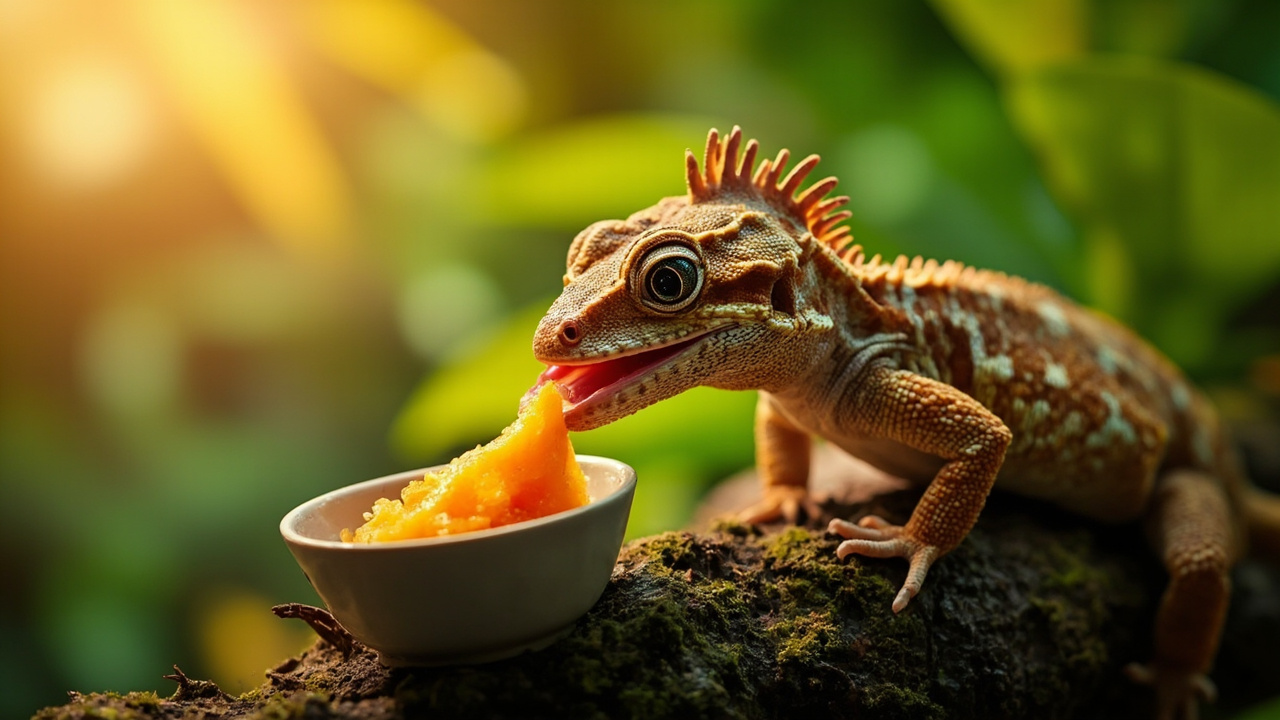
Crested geckos enjoy fresh fruit as an occasional treat, but it shouldn’t replace CGD. Safe fruits include mango, papaya, banana, peach, apricot, and fig — you’ll notice these match the flavors in commercial diets for good reason.
Avoid citrus fruits (oranges, lemons, grapefruit) — the citric acid can cause digestive upset. Avocado contains persin, a compound toxic to many reptiles and potentially fatal. Rhubarb and tomato leaves are also unsafe due to oxalate content.
Stick to a small bite-sized piece once a week at most. Fruit is a treat, not a meal replacement. Remove any uneaten fruit after a few hours to prevent bacterial growth in the warm enclosure environment.
Feeding Schedule by Age
Feeding frequency depends on your gecko’s age:
- Hatchlings (0–6 months): Offer fresh CGD daily. Young geckos are growing rapidly and need consistent nutrition. Remove and replace food every 24 hours.
- Juveniles (6–12 months): Feed 4–5 times per week. You can start leaving uneaten food for up to 36 hours at this stage.
- Adults (12+ months): Feed 3 times per week. Adults maintain weight easily and don’t need daily feeding.
Since crested geckos are nocturnal, place fresh food in the enclosure in the early evening and remove it the following morning. This timing aligns with their natural activity cycle — you’ll notice your gecko becoming more active and exploring the enclosure as the lights dim. A food dish positioned mid-height on a branch or wall is ideal, since crested geckos prefer to eat off elevated surfaces rather than the ground.
Using a shallow dish (like a bottle cap or small plastic condiment cup) works well. Deep bowls can make it difficult for geckos to access the food, especially juveniles. Clean the dish thoroughly between each feeding to prevent bacterial buildup. For general enclosure setup, including thermostat placement, check out our reptile thermostat guide.
For comparison with other popular reptile diets, our leopard gecko diet guide covers a very different feeding approach — leopard geckos are primarily insectivores and don’t use CGD at all. Similarly, ball python feeding follows a completely different schedule based on frozen-thawed rodents. And if you’re interested in UVB requirements that complement proper nutrition, our bearded dragon UVB guide covers the lighting side of reptile health.
Medical Disclaimer: This article is for informational purposes only and does not replace professional veterinary advice. If your reptile shows signs of illness, consult a qualified reptile veterinarian immediately.