Choosing the right reptile substrate is one of the most important decisions you will make for your pet’s enclosure. The wrong choice can lead to impaction — a blockage in the digestive tract that often requires emergency surgery — or respiratory problems from toxic fumes. The right choice keeps your reptile healthy and makes routine cleaning manageable.
This guide breaks down substrate options into three safety tiers, then covers species-specific recommendations for the most common pet reptiles.
Why Substrate Matters More Than You Think
Health Risks of the Wrong Substrate
Impaction is the single biggest danger. When a reptile lunges at prey on loose substrate, it inevitably swallows some of the bedding material along with the insect. In small amounts, most material passes through. But repeated ingestion — or a single large clump — can form a blockage.
Some substrates are riskier than others. Fine particles like calcium sand clump when moistened by stomach acid, turning into a solid mass. Fibrous materials like coconut fiber are less likely to cause blockages but can still accumulate over time. Solid substrates like tile and paper towel eliminate this risk entirely.
Beyond impaction, the wrong substrate can cause skin infections (scale rot from constantly wet bedding), respiratory irritation (cedar and pine release volatile oils), or improper humidity levels.
What Makes a Good Substrate
A good reptile substrate does three things: it maintains appropriate humidity for the species, it allows for natural behaviors like burrowing or digging, and it minimizes health risks. No single substrate checks all three boxes for every species — that is why species-specific guidance matters.
Temperature regulation is another factor many keepers overlook. Substrate depth affects how heat from under-tank heaters distributes through the enclosure. Thin substrates like paper towel let heat transfer directly to the air, while deep loose substrates insulate the floor and can block heat from reaching your reptile. If you use a heat mat — which we cover in our heat mat guide — make sure the substrate layer above it is thin enough to allow proper temperature gradient.
Odor control matters too. Some substrates absorb and neutralize waste smells better than others. Coconut fiber and cypress mulch score well here. Reptile carpet can develop odor if waste is not removed quickly from the fibers. Paper towel provides no odor control — you smell everything immediately, which is actually useful for monitoring digestive health.
Substrate Types by Safety Level
Tier 1 — Safest (Zero Impaction Risk)
Paper Towel is the gold standard for quarantine enclosures, hatchlings, and sick reptiles. It is free, disposable, and you can monitor waste output easily. The downside is purely aesthetic — paper towel looks nothing like a natural habitat.
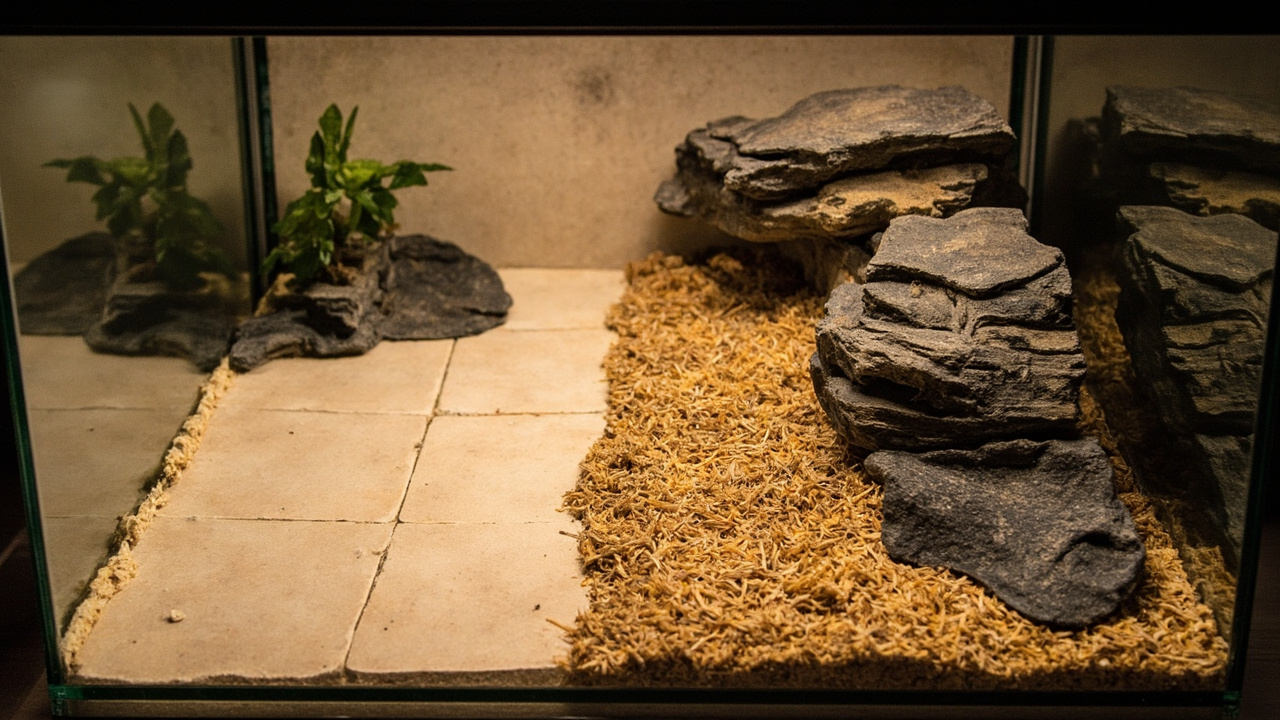
Ceramic or Slate Tile provides a natural-looking solid surface with zero impaction risk. Unglazed ceramic tile holds slight texture for grip, which is important for leopard geckos that need traction. Slate tiles retain some heat from an under-tank heater, providing a warm basking surface. Cut tiles to fit your enclosure floor — most home improvement stores will cut them for free.
The main advantage of tile over carpet is hygiene. Tile does not absorb moisture or harbor bacteria in fibers. A quick wipe with a damp cloth removes most waste. For reptiles that require a warm surface — like leopard geckos needing belly heat for digestion — tile conducts heat efficiently from an under-tank mat, which makes it functionally superior to carpet for this purpose. Some keepers use two or three tiles that can be rotated: one in the enclosure, one cleaning, one drying.
Reptile Carpet is a washable synthetic liner that comes precut to common tank sizes. The Mechpia Reptile Carpet fits 47 by 24 inch enclosures and can be rinsed and reused. The Zoo Med Eco Carpet comes in a two-pack sized for 10-gallon tanks. The main drawback is that waste can get caught in the fibers — you need to spot clean promptly and swap for a spare while washing.
Tier 2 — Acceptable for Adults (Low Risk with Correct Use)
Play Sand is safe for adult leopard geckos and bearded dragons — animals over 6 months old with established feeding accuracy. Use natural, sifted play sand like Sandbox Sand, not dyed or scented varieties. Keep it at a depth of one inch or less. Replace it monthly and sift out waste daily. Never use play sand for juveniles — their aim when hunting is poor and impaction risk is significantly higher.
Coconut Fiber (Eco Earth) is an excellent loose substrate for humidity-loving species. The Zoo Med Eco Earth comes in compressed bricks that expand when soaked in water. It holds moisture well, allows burrowing, and breaks down naturally. It is the standard choice for ball pythons, crested geckos, and tropical species. For species that do not need high humidity, coconut fiber can hold too much moisture and raise humidity beyond comfortable levels.
Cypress Mulch is another option for humid enclosures. Zoo Med Forest Floor Cypress Mulch holds humidity and allows burrowing. It has a natural appearance and resists mold better than coconut fiber in well-ventilated setups. Avoid bulk cypress mulch from garden centers — it may contain pesticides or harmful preservatives.
Tier 3 — Avoid (High Impaction or Toxicity Risk)
Calcium Sand (calci-sand) is marketed as a digestible substrate because it is made from calcium carbonate. This is misleading. Veterinary research has repeatedly shown that calcium sand does not dissolve in the digestive tract. Instead, it clumps when exposed to stomach acid, forming hard masses that cause impaction. The added calcium smell may actually encourage reptiles to eat more of it. The marketing relies on the idea that reptiles need dietary calcium — which is true — but they need it from food and supplements, not from eating their bedding. Avoid calci-sand entirely.
If you see calci-sand marketed with phrases like “digestible” or “recommended by breeders,” understand that these claims have no peer-reviewed veterinary backing. Reptile veterinarians consistently rank calci-sand as one of the most dangerous substrates available.
Walnut Shell bedding looks natural but has sharp edges that can cause internal damage when ingested. The irregular pieces do not pass smoothly through the digestive tract. There is no species where walnut shell is an appropriate choice.
Cedar and Pine wood shavings release aromatic oils called phenols. These compounds cause respiratory irritation and liver damage in reptiles. Even short-term exposure can lead to neurological symptoms in small animals. Pine is sometimes used with extensive aging and kiln-drying, but the risk is not worth it when safer alternatives exist. See our species care guides for species-specific safe options, and read our leopard gecko UVB guide for lighting that pairs well with your substrate choice.
Corn Cob bedding molds quickly when wet, harboring bacteria and fungi that cause respiratory and skin infections. It also swells when ingested, making impaction blockages worse.
Gravel and Aquarium Pebbles are sometimes used in aquatic turtle setups but are dangerous for terrestrial reptiles. They are easily swallowed and can form obstructive masses in the gut.
Species-Specific Substrate Recommendations
Leopard Gecko Substrate
Leopard geckos are terrestrial lizards from arid environments. They do not need high humidity — their ambient requirements sit around 30 to 40 percent. This makes substrate selection relatively straightforward.
Juveniles (under 6 months): Use paper towel, tile, or reptile carpet exclusively. Hatchlings have poor aim when hunting crickets and will swallow whatever is under the prey. Read our leopard gecko care guide for complete setup guidance.
Adults (6+ months): Paper towel, tile, and carpet remain the safest choices. If you prefer a natural look, sifted play sand at one inch depth is acceptable. Some keepers use a mix — tile in the warm hide area and sand in the cooler zone. For more on temperature requirements, see our leopard gecko temperature guide.
Avoid any loose substrate if your gecko has a history of impaction or tends to lick the ground frequently.
Bearded Dragon Substrate
Bearded dragons are from the Australian desert and need moderate basking heat with low ambient humidity (20 to 40 percent).
Juveniles: Paper towel or reptile carpet. Juvenile bearded dragons are enthusiastic eaters with little accuracy — they will ingest loose substrate along with every cricket. This is the most dangerous period for impaction because hatchlings eat frequently and their digestive systems are small. A single clump of sand or walnut shell can block a juvenile’s intestine completely. Check our bearded dragon species profile for full setup details.
Adults: Adults can use play sand at one inch depth, or a sand-soil mix for a more naturalistic enclosure. Adult bearded dragons have better feeding accuracy and more robust digestive systems. Reptile carpet remains a perfectly valid zero-risk option for adults too.
For bearded dragons kept in larger enclosures (4 by 2 by 2 feet or bigger), some keepers create a naturalistic desert floor using a mix of playsand and topsoil at 80/20 ratio, topped with slate tiles in the basking area. This gives the appearance of a natural habitat while keeping the primary feeding zone on solid surface. The dragon can still dig in the loose areas while eliminating impaction risk where it hunts most.
Avoid calci-sand especially for bearded dragons — their feeding style involves tongue-flicking and grabbing, which makes substrate ingestion almost inevitable with loose bedding. Also avoid any wood-based substrates — bearded dragons do not need the humidity retention and the dust can irritate their respiratory system.
Ball Python Substrate
Ball pythons are tropical snakes from West Africa. They need 50 to 60 percent humidity and do well with substrates that retain moisture.
All ages: Coconut fiber (eco earth) or cypress mulch are the standard choices. Both hold humidity and allow the snake to burrow, which is a natural behavior that reduces stress. A depth of two to three inches gives enough material for burrowing. Ball pythons are semi-fossorial in the wild, spending daylight hours in rodent burrows and termite mounds, so providing enough substrate to burrow supports this natural behavior.
Avoid sand, paper towel (does not hold humidity), and reptile carpet (same issue). For ball pythons, humidity retention is the primary consideration. A dry enclosure leads to incomplete sheds, respiratory infections, and dehydration — problems that are far more common than impaction in this species.
Some keepers use a mix of coconut fiber and cypress mulch to combine the moisture-holding properties of fiber with the structure and mold resistance of mulch. A 70/30 ratio of eco earth to cypress mulch works well for most setups. Spot clean feces and urates, and replace the entire batch every 3 to 4 weeks.
Crested Gecko Substrate
Crested geckos are arboreal and spend most of their time on branches and glass, but the enclosure floor still needs proper substrate. Paper towel works for simple setups, but coconut fiber is the better choice — it maintains the 60 to 80 percent humidity that crested geckos need. Bioactive setups are particularly popular for crested geckos because the species does well in planted tanks with moderate humidity.
Bioactive Substrates — Advanced Option
What Is a Bioactive Setup?
A bioactive enclosure recreates a natural soil ecosystem in your terrarium. It uses a layered substrate mix (drainage layer, soil layer, leaf litter) populated with clean-up crew insects like springtails and isopods. These microorganisms break down waste naturally, reducing the frequency of manual cleaning.
The base substrate is typically a mix of coconut fiber, topsoil, and sand in specific ratios. Leaf litter and sphagnum moss go on top. The clean-up crew handles feces and uneaten food, while live plants help maintain humidity and air quality.
A basic bioactive layer structure from bottom to top looks like this: a drainage layer of clay balls or lava rock (one to two inches), a mesh screen barrier to prevent soil mixing with drainage, an organic soil mix of coconut fiber and topsoil (three to four inches), and a top layer of leaf litter and sphagnum moss. The isopods and springtails live in the soil layer and break down organic matter.
The advantage is genuine self-sustainability. A well-established bioactive enclosure can go months without a full substrate change. The disadvantage is upfront cost and the need to monitor the ecosystem — if the clean-up crew dies off, waste accumulates. Springtails reproduce quickly in moist conditions, so maintaining humidity is key to keeping the bioactive system running.
When to Consider Bioactive
Bioactive setups work best for species that need moderate to high humidity and larger enclosures. They are ideal for crested geckos, bearded dragons in 40+ gallon tanks, and many tropical species. They are less practical for arid species like leopard geckos in small enclosures — the soil layer holds too much moisture for desert conditions.
Setting up a bioactive enclosure requires more upfront investment (substrate layers, plants, clean-up crew) but reduces long-term maintenance. For a complete enclosure setup, see our terrarium selection guide.
How to Maintain Any Substrate
Spot Cleaning vs Full Replacement
Regardless of substrate type, daily spot cleaning is non-negotiable. Remove feces and uneaten food as soon as you notice them. This prevents bacterial growth, odor, and parasite cycles.
For solid substrates (paper towel, carpet, tile), wipe down with a reptile-safe disinfectant weekly. Paper towel gets replaced entirely. Carpet gets swapped for a clean spare and the soiled one goes in the wash. Tile gets scrubbed and replaced.
For loose substrates, scoop out waste with a cat litter scoop or dedicated tongs. Replace the entire substrate on a schedule — coconut fiber and cypress mulch every 2 to 4 weeks, play sand every 4 to 6 weeks. Watch for mold or odor as a sign it needs early replacement.
Depth and Moisture Control
Keep loose substrates at the right depth for your species. One inch for arid species on sand, two to three inches for tropical species on coconut fiber. Deeper is not always better — overly deep substrate can harbor anaerobic bacteria in the lower layers, especially in humid setups with poor ventilation.
Mist coconut fiber and cypress mulch as needed to maintain target humidity. Use a digital hygrometer to monitor — guesswork leads to either dried-out substrate or stagnant pools. Mist one corner of the enclosure rather than the entire surface — this creates a humidity gradient that lets your reptile choose the microclimate it prefers.
Our tank size calculator can help you estimate substrate volume based on your enclosure dimensions. As a general rule, multiply the floor area in square inches by the desired depth in inches, then divide by 20 to get the approximate dry volume in quarts for loose substrates like coconut fiber. For choosing the right enclosure size, see our terrarium guide.
Glass tanks lose moisture faster through evaporation, so they often need water-holding substrates like coconut fiber even for species that tolerate moderate humidity. PVC or melamine enclosures retain humidity differently — factor this into your substrate choice.