Why Reptile Terrarium Material Matters More Than You Think
A reptile terrarium affects three daily husbandry factors that directly impact your animal’s health.
Temperature control: Glass loses heat 15-20% faster than PVC of the same thickness. In a room that drops to 65°F at night, a glass enclosure requires more heating wattage to maintain the warm side. Over months, this adds up in electricity costs and equipment wear. PVC’s insulation advantage means your thermostat cycles less frequently and your temperature gradient stays more stable.
Humidity management: Desert species need low humidity (20-40%), tropical species need high humidity (60-80%). Glass provides a neutral baseline — it doesn’t add or remove moisture significantly. PVC’s sealed construction helps retain humidity for tropical species. Screen cages are essentially open-air, making them unsuitable for any species that needs controlled humidity.
Longevity and maintenance: Glass lasts decades without degradation. PVC can yellow slightly under intense UVB exposure over many years, though this is mainly cosmetic. Acrylic scratches easily and degrades with certain cleaning chemicals. Screen mesh can develop rust spots near the frame joints in humid environments if the powder coating is thin.
The practical takeaway: When choosing a reptile terrarium, consider your species’ environmental needs first, aesthetics second. A bearded dragon in a PVC enclosure will be healthier and easier to maintain than one in a glass tank that loses heat all winter.
Choosing the right reptile terrarium is the single most important decision you’ll make for your reptile’s health and your own sanity as a keeper. The wrong enclosure size makes temperature gradients impossible to maintain. The wrong material traps humidity or lets it escape. Poor latches lead to midnight escape attempts. This guide covers the four terrarium materials, access styles, and species-specific sizing so you can buy once and buy right. New to reptile keeping? Start with our getting started guide for a complete overview.
Understanding the 4 Reptile Terrarium Types
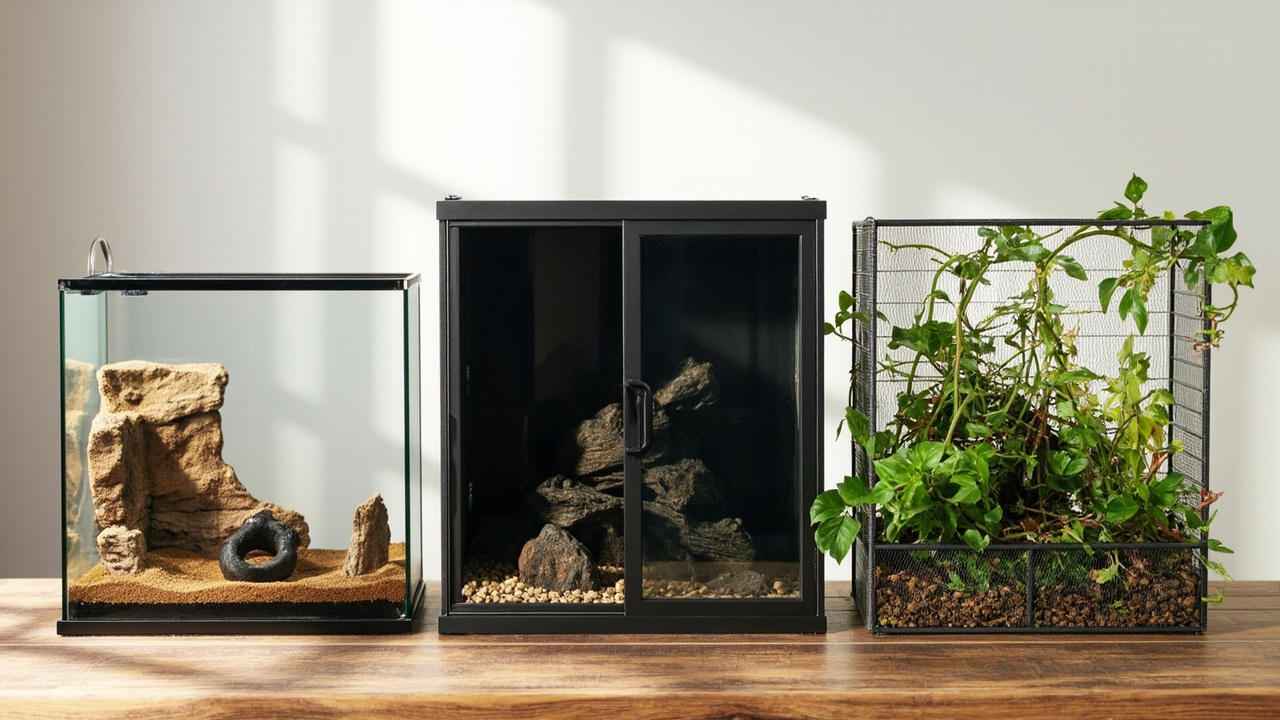
Every reptile terrarium falls into one of four material categories, each with distinct trade-offs.
Glass Terrariums
Glass is the most common and widely available reptile terrarium option, led by the Exo Terra Natural Terrarium line. These tanks use hinged front-opening glass panels with a mesh ventilation strip along the top.
Why choose glass: Visibility is unmatched. You see your reptile clearly from any angle, which matters both for your enjoyment and for monitoring health changes. Glass panels are also easy to wipe clean and don’t hold odors. The Exo Terra Large (36x18x18) ($169.99) is the standard recommendation for species needing a 40-gallon minimum. For juveniles or smaller species, the Exo Terra Medium (24x18x12) ($109.99) offers the same construction in a more compact footprint.
The downside: Glass is heavy and fragile. A 40-gallon glass tank weighs 30-50 lbs empty. If you need to move enclosures for cleaning or relocating, glass is a workout. Glass is also thermally conductive, meaning it loses heat faster than other materials. In a cold room, maintaining your basking gradient requires more wattage. The REPTI ZOO 36x18x18 ($179.99) is a solid glass alternative with comparable build quality.
Best for: Leopard geckos, crested geckos, small lizards, and any species kept in dry or moderate humidity environments where visibility matters more than heat retention.
PVC Enclosures
PVC (polyvinyl chloride) reptile terrariums use opaque or semi-opaque plastic panels with glass sliding doors in the front. Brands like RepWild, Zen Habitats, and REPTI ZOO dominate this category.
Why choose PVC: Heat retention is the killer feature. PVC walls are thicker and less conductive than glass, retaining heat up to 20% longer. This makes it dramatically easier to maintain distinct temperature zones in your reptile terrarium — a 100-110°F basking spot right next to a 75-85°F cool zone. The RepWild 50 Gallon PVC ($229.99) at 36x18x18 is ideal for bearded dragons and similar species. For a step up in size and finish, the Zen Habitats 4x2x2 ($299.99) offers premium construction with excellent sliding door mechanisms.
PVC is also significantly lighter than glass, making cleaning and rearranging far easier. Many PVC enclosures offer customizable ventilation panels, letting you adjust airflow for humidity-sensitive species. The REPTI ZOO 33 Gallon PVC Tall ($169.99) at 18x18x24 is well-suited for arboreal species that need vertical space.
The downside: Visibility is reduced. You can see through the front glass doors, but the side and back panels are opaque. If watching your reptile from multiple angles is important to you, PVC feels limiting. The plastic panels can also scratch over time, though this is mainly cosmetic.
Best for: Bearded dragons, ball pythons, and any species that needs stable, warm environments. PVC is also excellent for humidity-loving species since the material doesn’t breathe like screen mesh.
Screen Cages
Screen cages use a metal or aluminum frame with mesh panels on all sides. They are lightweight and offer maximum airflow, making them the dominant choice for chameleon keeping and similar arboreal species looking for an open reptile terrarium.
Why choose screen: Ventilation is unmatched. UVB light passes through screen mesh unobstructed, and fresh air circulates freely. This makes screen cages the standard for chameleon keepers, who need high airflow to prevent respiratory infections. The open design also allows misting systems and drippers to operate freely without restricted airflow around the animal. Screen cages are significantly lighter than any glass or PVC option of comparable size — a 24x24x48 screen cage weighs under 10 lbs, while a glass equivalent would weigh 50+ lbs.
Another advantage for arboreal species: screen cages provide climbing surfaces on every side. Chameleons and similar climbers grip mesh easily, effectively using the entire interior volume rather than just the floor. This dramatically increases usable space for species that rarely touch the ground.
The downside: Screen cages retain almost zero heat or humidity. You cannot create a warm basking zone in a screen cage — the heat escapes immediately through the mesh. Maintaining humidity above 40% in a screen cage is nearly impossible without constant misting. They are also not escape-proof for small reptiles or snake species, as mesh gaps can be exploited by determined animals. Screen cages are a niche product for a narrow range of species.
Best for: Chameleons (veiled, panther, jackson’s), some arboreal geckos, and certain tropical lizards. Screen cages are specialized enclosures — they are not suitable for leopard geckos, bearded dragons, ball pythons, or any species that needs heat or humidity control. If you are keeping a chameleon, expect to supplement with a dripper or mister system since the open mesh cannot hold humidity. For most first-time reptile keepers, screen cages should not be on your list.
Acrylic Enclosures
Acrylic reptile enclosures are the middle ground — lighter than glass, clearer than PVC, with decent heat retention. They look premium and are popular for display setups.
Why choose acrylic: Light weight, excellent clarity, and better insulation than glass. A 40-gallon acrylic tank weighs roughly half what glass does. Acrylic also provides a modern aesthetic that some keepers prefer for living room or office displays. The material insulates better than glass, though not as well as PVC, making it a reasonable compromise between visibility and temperature retention.
The downside: Acrylic scratches very easily, even from normal cleaning with paper towels or non-abrasive pads. Once scratched, the clarity is permanently diminished — unlike glass, acrylic cannot be polished back to its original state in most cases. Availability is limited compared to glass and PVC, and prices run higher for comparable sizes. Few major brands produce acrylic reptile enclosures at scale, so finding replacement parts or upgrading can be difficult.
Best for: Display enclosures where aesthetics matter more than daily handling. A niche option for experienced keepers with specific needs. For first-time keepers, glass or PVC are more practical choices due to wider availability and easier maintenance.
Melamine and Wood Enclosures
Wood-based reptile enclosures (melamine-coated particle board) are common in custom builds and large-scale reptile terrarium setups. They offer excellent insulation and can be built to any custom size.
Why choose wood: Insulation is outstanding. A well-sealed melamine enclosure retains heat and humidity better than any other material. Cost per gallon is the lowest of any material when building at scale — a custom 4x2x2 melamine enclosure costs less than half of a comparable PVC setup if you build it yourself.
The downside: Wood is heavy, absorbs moisture over time (leading to warping and mold if not sealed properly), and cannot be cleaned as easily as glass or PVC. Melamine chips if impacted, and the edges can delaminate in high humidity. These enclosures are practical for permanent installations in dedicated reptile rooms but impractical for most home setups that require periodic cleaning and relocation.
Front-Opening vs Top-Opening Access
Your reptile terrarium’s access style affects how you interact with your reptile daily. This matters more than most first-time keepers realize.
Front-Opening (Sliding Doors)
Most PVC enclosures and some glass models use front-sliding doors. You reach in from the side at a natural angle.
The practical advantage: cleaning, feeding, and decor adjustments are all easier because you have full access to the enclosure floor without reaching over a tall wall. Approaching from the side also triggers less of a predator-avoidance response in reptiles compared to a hand coming from above.
The Zen Habitats 4x2x2 and RepWild 50 Gallon both use sliding front doors. Look for reptile terrarium models with a lock — bearded dragons and snakes learn to push open weak latches.
Top-Opening (Hinged Doors or Removable Lid)
The Exo Terra glass reptile terrarium line uses top-opening hinged doors. The front glass panel swings down like a cabinet door.
This design is secure and allows enclosures to be stacked. However, reaching the back corners of a deep tank requires leaning over the front wall, which gets uncomfortable during cleaning. Some species also associate overhead movement with predators, making them more skittish during handling when approached from above.
Size Guide: Minimum Enclosure by Species
The minimum enclosure size for your reptile terrarium depends on the species’ adult size and activity level. Too small means no room for a proper temperature gradient. Too large can overwhelm a juvenile. Here are the minimums by popular species.
Leopard Gecko
- Juvenile (under 6 months): 10 gallon minimum
- Adult: 20 gallon long (30x12x12) minimum, 40 gallon recommended
Leopard geckos are terrestrial — floor space matters more than height. A 20-gallon long provides enough room for a warm hide, cool hide, moist hide, and feeding area without crowding in your reptile terrarium. The Exo Terra Medium works well for adults if space is limited, but upgrading to the Exo Terra Large gives your gecko more room to explore and makes the temperature gradient easier to maintain. For leopard gecko keepers setting up their full enclosure, see our temperature setup guide for heating requirements.
Bearded Dragon
- Juvenile (under 6 months): 20 gallon minimum
- Adult (6+ months): 40 gallon (36x18x18) minimum, 75-120 gallon recommended
Bearded dragons are active, territorial lizards that need horizontal space for basking, feeding, and movement. A 40-gallon enclosure is the absolute floor for an adult, but most experienced keepers recommend 75 gallons or larger. The RepWild 50 Gallon PVC is a strong choice for this species because PVC heat retention helps maintain the wide temperature gradient bearded dragons require. Use the temperature converter when setting up your basking zone to convert between Fahrenheit and Celsius.
Crested Gecko
- Adult: 18x18x24 tall minimum
Crested geckos are arboreal — they climb vertical surfaces and sleep on leaves and branches. Height is the priority, not floor space. A tall enclosure with vertical branches and plants provides the climbing environment they need. The Carolina Custom Cages 24x18x36 Tall ($249.99) is purpose-built for arboreal species.
Ball Python
- Adult: 40 gallon minimum, 4x2x2 PVC preferred
Ball pythons are terrestrial and nocturnal. They need horizontal space with secure, tight-fitting hides on both the warm and cool sides of their reptile terrarium. PVC enclosures are popular for ball pythons because the material holds heat well and the opaque sides reduce visual stress (ball pythons are ambush hunters that prefer limited visibility).
Key Features to Look For
Ventilation
Proper ventilation prevents mold, respiratory infections, and stagnant air in any reptile terrarium. Glass terrariums use a mesh strip under the lid for passive airflow. PVC enclosures often have adjustable ventilation ports. Screen cages are essentially all-ventilation. For most species, passive ventilation through a mesh panel is sufficient. Avoid fully sealed enclosures — even desert species need some air exchange.
Security (Latches and Locks)
This is non-negotiable. Bearded dragons learn to push open weak latches. Ball pythons are escape artists that can squeeze through gaps you wouldn’t believe. Look for enclosures with sturdy, lockable latches. The RepWild and Zen Habitats lines both have reliable locking mechanisms.
Waterproof Base
Water spills from water dishes, substrate moisture, and cleaning all expose the enclosure base to liquid. PVC enclosures typically have sealed, waterproof bases. Glass terrariums vary — Exo Terra models have a raised plastic base that protects furniture, but not all glass tanks do. A waterproof base prevents warped furniture and water damage to surfaces. Use the tank size calculator to verify your enclosure dimensions match species requirements, the setup cost calculator to budget your complete enclosure purchase, and the UVB distance calculator to check that your UVB bulb is positioned at the correct distance for your species.
Setting Up Your New Reptile Terrarium
Once you have your reptile terrarium, resist the urge to fill it all at once. Setting up in stages lets you verify your temperature gradient works before adding your reptile.
What Goes Inside Your Reptile Terrarium
Beyond the reptile terrarium itself, your setup requires several components that work together. A proper setup includes: substrate (the ground material), heat sources, UVB lighting, hides (at least two — warm and cool side), a water dish, thermometers and hygrometers for monitoring, and decor like branches or rocks for climbing species. Each of these items needs to work within the specific dimensions and material of your chosen reptile terrarium. For a complete species-specific setup guide, see our leopard gecko care page or bearded dragon care page.
Substrate Layer
Start with the substrate for your reptile terrarium. For desert species like leopard geckos, paper towel or tile is safest for juveniles, while play sand works for adults. For humidity-loving species, coconut fiber (eco earth) or cypress mulch holds moisture well. Avoid cedar, pine, and walnut shells — these are toxic to reptiles. See our [substrate guide]() for detailed recommendations by species.
Heat Source Placement
Your basking heat source goes on the warm end, ideally with a thermostat to prevent overheating. Heat mats go under the tank for terrestrial species (leopard geckos, ball pythons), while heat lamps or deep heat projectors sit above the basking area for diurnal species (bearded dragons). Use a reliable thermometer on both the warm and cool sides — a digital probe thermometer like the Zoo Med Digital Thermometer ($9.99) gives accurate readings. For precise temperature control, pair your heat source with the Inkbird Thermostat ($36.89).
Hides and Decor
Place at least two hides — one on the warm side, one on the cool side of your reptile terrarium. Your reptile should be able to move between temperature zones without feeling exposed. A moist hide on the warm side is essential for leopard geckos during shedding cycles.
UVB Lighting
Diurnal reptiles (bearded dragons, most lizards) require UVB lighting for vitamin D3 synthesis inside their reptile terrarium. Position the UVB bulb over the basking area following the manufacturer’s distance guidelines. A UVB bulb placed too far from the basking spot is ineffective. For detailed setup instructions, see our [lighting and heat setup guide]().
Final Check
Before introducing your reptile, run the reptile terrarium for 24 hours. Verify the warm side stays within your species’ preferred range and the cool side drops appropriately. Check that the thermostat is functioning and the UVB bulb is at the correct distance. A stable, tested environment reduces stress and health problems from day one.
If you notice your reptile spending all its time in one corner, refusing to eat, or showing color changes, these can indicate enclosure-related stress. See our leopard gecko temperature guide for what proper temperature ranges look like in practice. The most common cause is an inadequate temperature gradient in your reptile terrarium — meaning the hot side isn’t hot enough or the cool side isn’t cool enough for the species. Use a digital thermometer with two probes to measure both zones simultaneously and adjust your setup accordingly.