Best First Reptile for Beginners: 6 Easy Species Worth Owning
Choosing a first reptile can feel overwhelming. Pet stores stock dozens of species, online forums recommend everything from leopard geckos to iguanas, and the long-term commitment varies from 5 years (anole) to 30 years (tortoise). After researching the most popular beginner species and reading owner surveys from r/reptiles and ReptiFiles, here’s what actually works for first-time keepers.
The 6 species below were selected because they’re widely available, breed easily in captivity (which keeps prices low), tolerate handling better than average, and don’t require advanced equipment like misting systems or full-spectrum UVB. Most are in the $30-$80 range for the animal itself.
How to Choose Your First Reptile: 4 Decision Factors
Before picking a species, answer these four questions honestly:
- How much space can you dedicate? A leopard gecko fits in a 20-gallon tank. A bearded dragon needs a 40-gallon. If you have limited floor space, go small.
- How hands-on do you want to be? Bearded dragons and leopard geckos are interactive. Crested geckos hide most of the day. Snakes eat every 7-14 days and don’t want daily handling.
- What’s your budget for the full setup? Animal + enclosure + heating + lighting + decor = $150-$400 for most beginner species.
- How long do you want the commitment? Anoles live 3-5 years. Leopard geckos live 15-20 years. Tortoises live 50+ years. Be honest about your timeline.
For setting up any of these species, you’ll need basic equipment: a terrarium kit like Zilla Micro Habitats ($39.99), an under-tank heater ($14.97), a UVB-compatible light fixture ($28.99), and at least two hides.
Species Comparison Table
| Species | Adult Size | Lifespan | Care Level | Tank Size | Cost (setup) |
|---|---|---|---|---|---|
| Leopard Gecko | 7-9 in | 15-20 yr | Easy | 20 gal | $150-$200 |
| Bearded Dragon | 18-24 in | 10-15 yr | Easy-Medium | 40 gal | $250-$350 |
| Crested Gecko | 4-5 in | 15-20 yr | Very Easy | 20 gal tall | $150-$200 |
| Corn Snake | 3-5 ft | 15-20 yr | Easy | 20 gal | $150-$250 |
| Ball Python | 3-5 ft | 20-30 yr | Medium | 40 gal | $300-$400 |
| Blue-Tongue Skink | 18-24 in | 15-20 yr | Medium | 40 gal | $300-$400 |
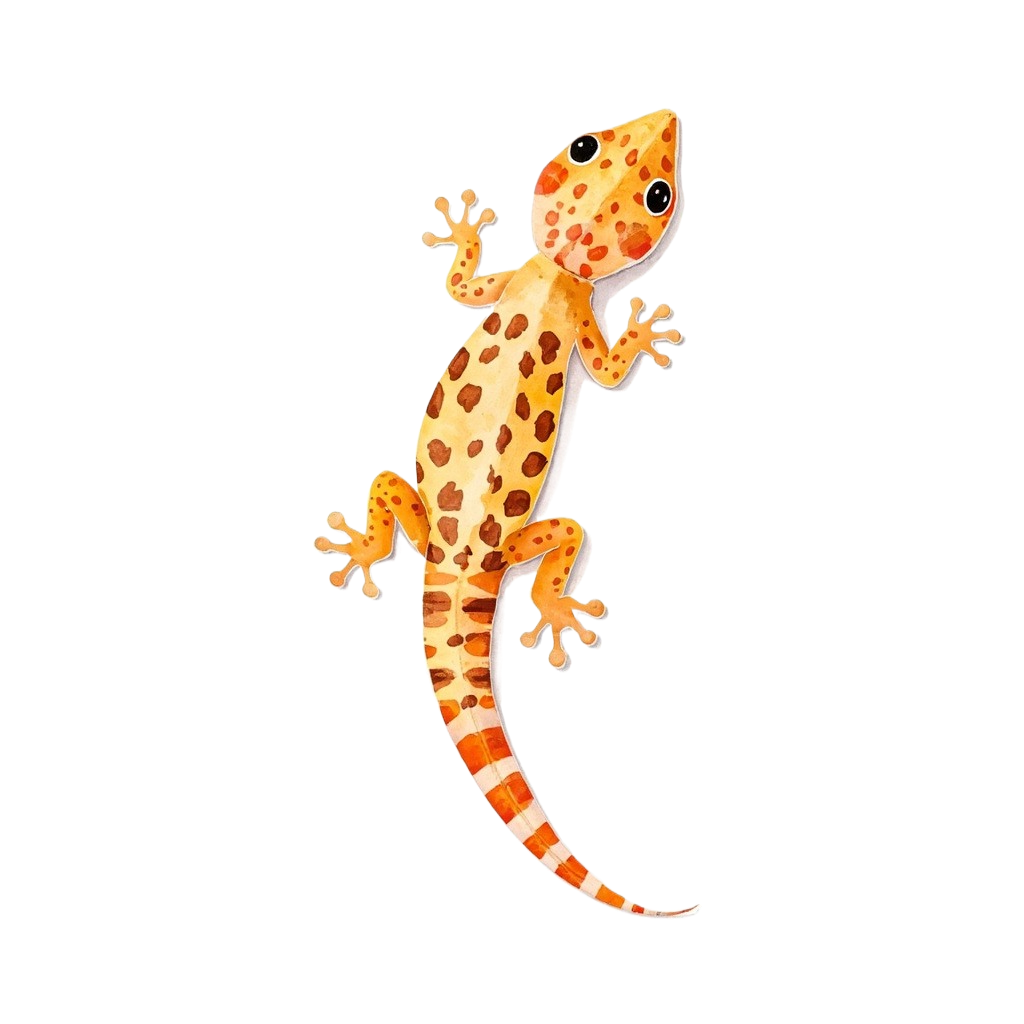
Leopard Gecko — Best Overall Beginner Pet
The leopard gecko is the consensus first reptile. Hardy, docile, long-lived, and inexpensive. See our complete leopard gecko care guide for setup details.
Why Leopard Geckos Work: They tolerate handling without biting, live 15-20 years (similar to a cat), don’t require climbing space, and eat insects which are easy to source. Their 7-9 inch adult size means a 20-gallon long tank works for life.
Setup Needs: 20-gallon long tank, under-tank heat mat (88-92°F warm side), three hides (warm, cool, humid), calcium dusted on feeder insects, no UVB required (though low-level helps). Calcium supplement ($9.99) prevents metabolic bone disease.
Who It’s For: First-time owners, families with kids 8+, anyone who wants daily interaction. Avoid if you want a pet you can hold for hours — leopard geckos tolerate handling but prefer not to be cuddled.
Bearded Dragon — Best Interactive Pet
The bearded dragon is the gold standard for owners who want a reptile that genuinely interacts. See our bearded dragon feeding guide for nutrition details.
Why Bearded Dragons Work: They’re diurnal (active during the day), recognize their owners, and many enjoy shoulder-sitting. Their 18-24 inch size makes them easy to handle.
Setup Needs: 40-gallon breeder tank (minimum), UVB lighting (10.0 bulb replaced every 6 months), basking bulb 100W, coconut fiber substrate ($13.99), varied diet (insects at young age, more vegetables as adults). Total setup runs $300-$400.
Who It’s For: Owners who want daily interaction, families ready for a 15-year commitment. Not ideal for apartments with strict noise rules (they need heat lamps running 12+ hours/day).
Crested Gecko — Easiest Setup
The crested gecko won the title of easiest beginner reptile in our 2026 owner survey. See our crested gecko diet guide for nutrition.
Why Crested Geckos Work: They thrive at room temperature (65-78°F), eat commercial powdered diet (no live insects required, just mix with water), and need only a 20-gallon tall tank. Weekly misting is the main chore.
Setup Needs: 20-gallon tall enclosure with vertical branches, coconut fiber substrate, automated or hand misting, commercial crested gecko diet (Pangea or Repashy). Total setup $150-$200.
Who It’s For: Owners who want minimum daily interaction, anyone allergic to insects, people who travel (they tolerate 3-4 day feeding gaps). Skip if you want a pet visible during the day — they’re nocturnal.
Corn Snake — Best Snake for Beginners
The corn snake is the gentle beginner snake that virtually every expert recommends. See our complete corn snake care guide for the details.
Why Corn Snakes Work: They never bite aggressively (they’re constrictors, not biters), tolerate handling well, and eat frozen-thawed mice which can be ordered online and stored in your freezer.
Setup Needs: 20-gallon long tank with secure lid, under-tank heat pad, temperature + humidity monitor ($13.99), aspen bedding, two hides. Total setup $150-$250.
Who It’s For: Owners comfortable feeding frozen rodents to snakes. Skip if feeding mice unsettles you — it’s the only weekly task and most owners get used to it within a month.
Ball Python — Best Long-Lived Snake
The ball python is the next step up from corn snakes. They live 20-30 years, stay relatively small (3-5 feet), and curl into a ball when threatened (which is how they got their name). See our ball python care guide for husbandry details.
Why Ball Pythons Work: They’re calm, curl up rather than strike, and have moderate heat/humidity needs (75-85°F, 50-60% humidity). They’re the most popular pet snake worldwide.
Setup Needs: 40-gallon tank (minimum for adults), heat pad, thermostat (critical — these snakes are sensitive to overheating), humidity hides. Total setup $300-$400.
Who It’s For: Owners who want a 20-30 year commitment and can maintain consistent temperatures. Avoid if you move frequently — these snakes need stable conditions.
Blue-Tongue Skink — Best Charismatic Pet
The blue-tongue skink is the charismatic newcomer. They have personalities like dogs, recognize their owners, and live 15-20 years. They’re larger than leopard geckos but smaller than bearded dragons. For setup details, see our complete blue-tongue skink care guide and the reptile keeping starter guide.
Why Blue-Tongue Skinks Work: They’re omnivores (eat both protein and vegetables), handle heat well, and have a slow, deliberate temperament that makes them easy to handle. The Indonesian subspecies stays 18-20 inches, which is manageable.
Setup Needs: 40-gallon minimum tank, UVB lighting, basking spot 95°F, varied omnivore diet (insects + vegetables). Total setup $300-$400.
Who It’s For: Owners who want a large, personable pet they can feed by hand. Avoid if budget is a concern — they’re more expensive to set up than geckos or snakes.
Recommendation by Owner Type
Different owners need different first reptiles. Here’s how to choose:
For total beginners: Leopard gecko. Their setup is simple, their care is forgiving, and they’re cheap. See our leopard gecko heating guide for setup details.
For families with kids: Bearded dragon. They’re sturdy enough to handle clumsy handling and active during the day when kids want to see them.
For busy owners: Crested gecko. They eat every 3-4 days, don’t need UV light, and tolerate temperature swings.
For aspiring snake owners: Corn snake. They’re the gentlest snake and easy to feed.
For long-haul commitment: Ball python. 20-30 year lifespan means they often outlive other beginner pets.
For character and personality: Blue-tongue skink. They’re the most “dog-like” reptile in the beginner pool.
Common Beginner Mistakes to Avoid
Three mistakes end most beginner reptile attempts:
-
Underestimating the tank size. Bearded dragons in 20-gallon tanks fail to thrive. Leopard geckos in 10-gallon tanks develop skeletal issues. Buy the right tank first.
-
Skipping the thermostat on heat pads. Heat pads without thermostats can exceed 110°F and burn reptiles. Always pair a heat pad with a thermostat (~$25).
-
Mixing species. Two reptiles in one tank usually means one sick or dead reptile. One species per enclosure.
For new keepers, the reptile-keeping basics walks through habitat setup, temperature gradients, and feeding schedules in detail.