Bearded Dragon Tank Setup Guide
Setting up a proper enclosure
Quick Answer
Adult bearded dragons need a minimum 40-gallon breeder tank (36x18x16 inches). Juveniles can start in 20-gallon tanks but outgrow them within 6-8 months. Front-opening enclosures retain heat better than screen-topped aquariums. The tank must support a temperature gradient from 100-110°F (basking) to 75-85°F (cool side) with strong UVB lighting covering 2/3 of the enclosure.
Reviewed by Dr. Sarah Chen, DVM (Exotic Animal Medicine, 10+ years clinical practice). Last updated: 2026-07-16.
is the single most important thing you can do for a bearded dragon. A good bearded dragon tank setup includes large floor space, specific temperature zones, and strong UVB lighting. This bearded dragon tank setup guide covers the essentials — get the enclosure size right, pick a material that holds heat, and arrange the interior with proper zones.
What Size Tank Does a Bearded Dragon Need?
Adult Bearded Dragon Tank Size
An adult bearded dragon needs a minimum 120-gallon enclosure measuring at least 48” long x 24” wide x 24” tall (4’x2’x2’). The reason dimensions matter more than the gallon rating is simple — bearded dragons are terrestrial lizards that need horizontal running space, not vertical height. A long, shallow enclosure gives them room to thermoregulate by moving between warm and cool zones.
You’ll see some pet stores recommend 40-gallon tanks for adults, but that’s outdated advice. Modern husbandry standards from reptile care authorities like ReptiFiles and The Bio Dude agree that 120 gallons is the floor, not the ceiling. Going larger — 4’x2’x3’ or even 6’x2’x2’ — gives your dragon more enrichment space and is always better if you have the room.
The Herture 120 Gallon Reptile Tank with Stand ($299.99) hits the exact 4’x2’x2’ minimum with sliding acrylic doors, a mesh top for fixture mounting, and a built-in storage cabinet. It’s a straightforward option that checks every sizing requirement. Use the Tank Size Calculator to compare other enclosure dimensions against the minimum.
Juvenile Bearded Dragon Tank Size
Juveniles can temporarily live in a 40-gallon breeder tank (36”x18”x18”) for their first few months. However, starting directly in the adult-sized enclosure avoids the stress of rehousing later. Baby bearded dragons in a large tank won’t have trouble finding food — just make sure the basking and cool zones are set up correctly with appropriate distances.
Plan to move your dragon into the full 120-gallon setup by 12 months of age at the latest. Many keepers skip the intermediate size entirely and go straight to the adult enclosure.
Can Two Bearded Dragons Share a Tank?
No. Bearded dragons are solitary reptiles, and cohabitation consistently leads to aggression, dominance behavior, and chronic stress. One dragon will monopolize the basking spot and food while the other suffers. Keep one dragon per enclosure — there are no exceptions to this rule.
Glass vs PVC vs Wood — Which Enclosure Material Is Best?
The material you choose affects heat retention, visibility, and long-term durability. For a deeper comparison of enclosure types, see our terrarium buying guide.
Glass Terrariums
Glass tanks are easy to find at any pet store and offer clear visibility. The downsides are significant: glass reflects the dragon’s own image, which can trigger defensive behavior and stress. Glass also loses heat quickly and affordable glass tanks top out around 40–50 gallons — too small for an adult. Glass works as temporary juvenile housing but isn’t ideal for a permanent adult setup.
The PROLEE 82 Gallon Bearded Dragon Tank ($159.99) is a budget glass option, but at 48”x19.5”x19.5” it falls short of the 120-gallon minimum. It’s worth considering only if you plan to upgrade within a year.
PVC Enclosures
PVC enclosures are the top choice for adult bearded dragons. They’re lightweight, hold heat far better than glass, and typically feature front-opening doors that make maintenance and handling much easier. PVC panels don’t create reflections, so your dragon won’t see a “rival” in the wall. The main drawback is price — expect to pay more upfront — and limited availability in brick-and-mortar stores.
Wooden Enclosures
Wooden enclosures combine excellent heat retention with a natural aesthetic. They’re popular among DIY keepers because you can customize dimensions and add features like built-in shelves or background texture. The New Age Pet ECOFLEX 48” Large Reptile Habitat ($246.90) is a pre-built wood composite option with sliding glass doors and mesh top that assembles with minimal tools.
The catch with wood: it’s heavy and must be properly sealed to prevent moisture damage and mold. If you go this route, use a reptile-safe sealant on all interior surfaces.
How to Set Up the Inside of a Bearded Dragon Tank
Creating the Warm Side (Basking Zone)
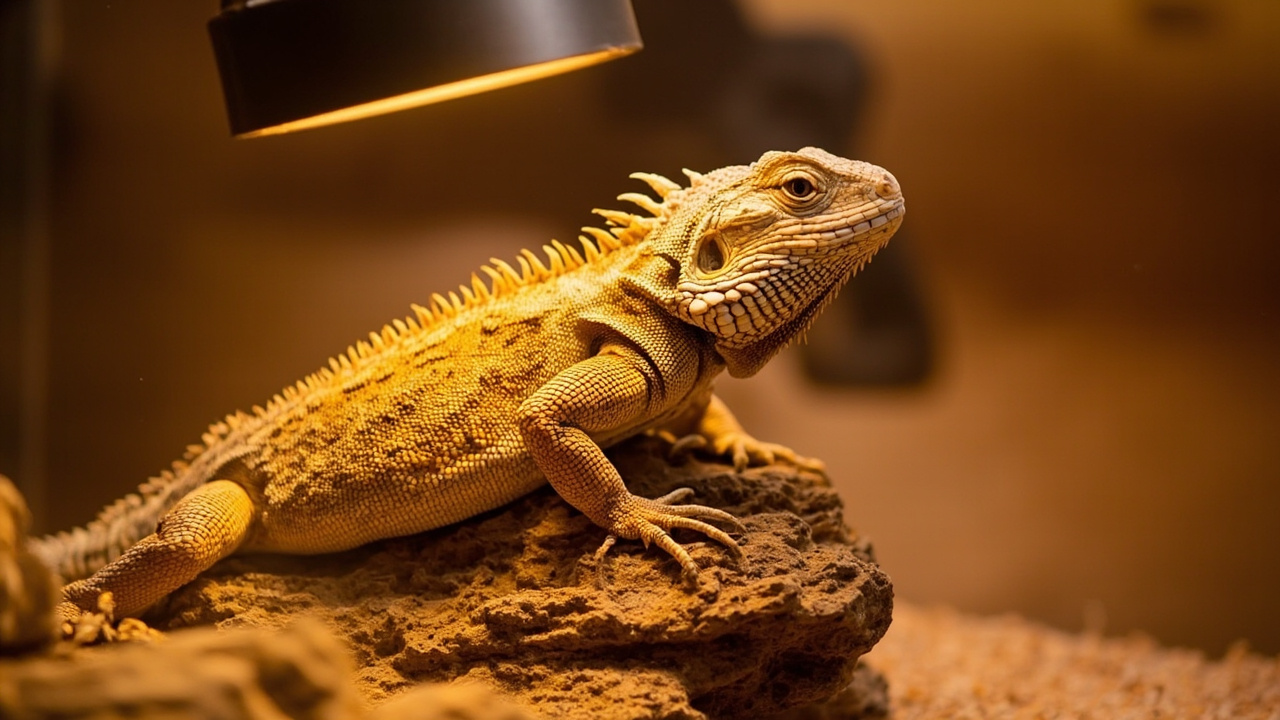
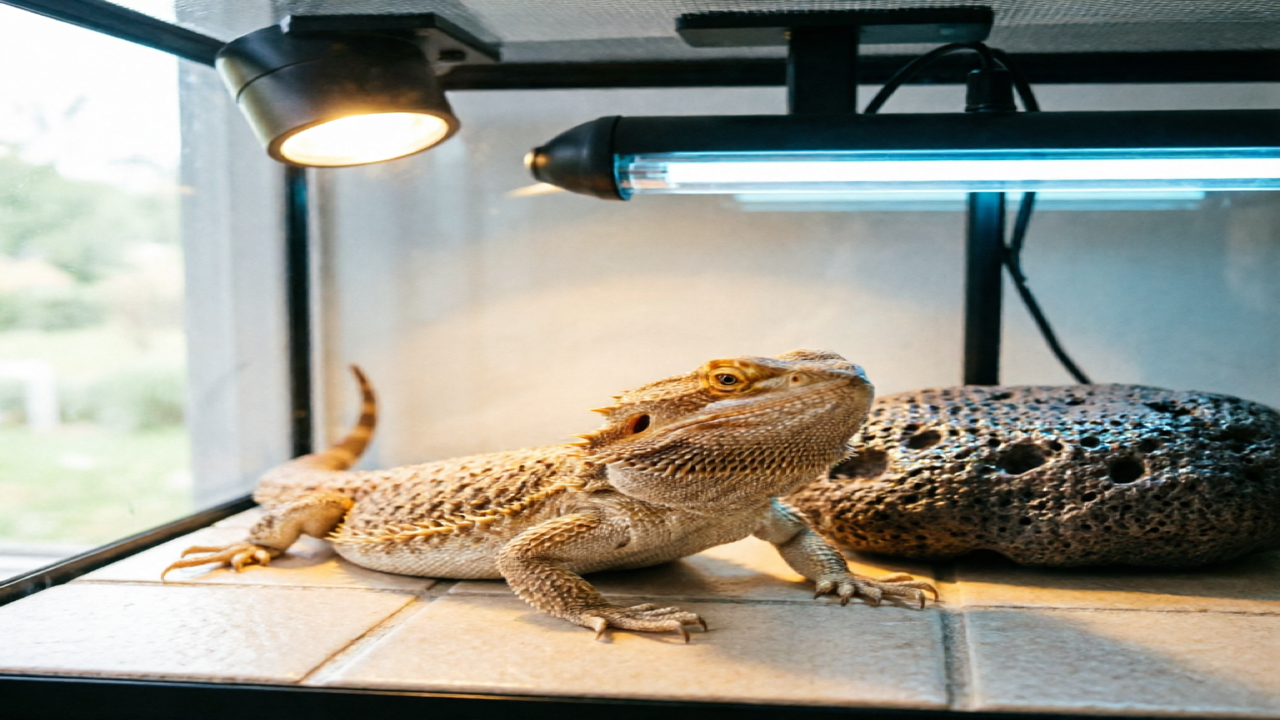
The basking zone sits at one end of the enclosure and should reach 95–105°F at the dragon’s back when measured with a digital probe thermometer. Place a basking platform or flat rock roughly 8–10 inches below the heat lamp so your dragon can get close enough to reach target temperatures.
Mount the basking bulb in a deep dome fixture clamped to the top or side of the enclosure. For detailed guidance on bulb wattage and fixture placement, see our bearded dragon temperature guide and the general lighting and heat setup article. If you need a supplemental heat source, our heat mat guide explains when belly heat is and isn’t appropriate.
Setting Up the Cool Side
The opposite end should stay between 75–85°F. Place a cool-side hide here — a half-log or cave structure where your dragon can retreat to escape the heat and feel secure. Position food and water dishes on or near the cool side so they don’t dry out under the basking lamp. The distance between warm and cool zones matters: a 4-foot enclosure provides enough gradient space, which is another reason 120 gallons is the minimum.
Substrate Options
Substrate choice directly affects your dragon’s health. Avoid loose sand, calcium sand, and walnut shells — they carry a real risk of intestinal impaction if accidentally ingested during feeding.
Safe options include:
- Ceramic tiles — easy to clean, retains heat well, zero impaction risk
- Paper towels — best for juveniles during quarantine or potty training
- Reptile carpet — workable but can trap debris in the fibers if not cleaned regularly
If you maintain proper humidity levels, bioactive substrate with a cleanup crew is an advanced option that reduces maintenance long-term. Check our bearded dragon shedding guide for humidity-related tips that tie into substrate choice.
UVB Lighting Placement
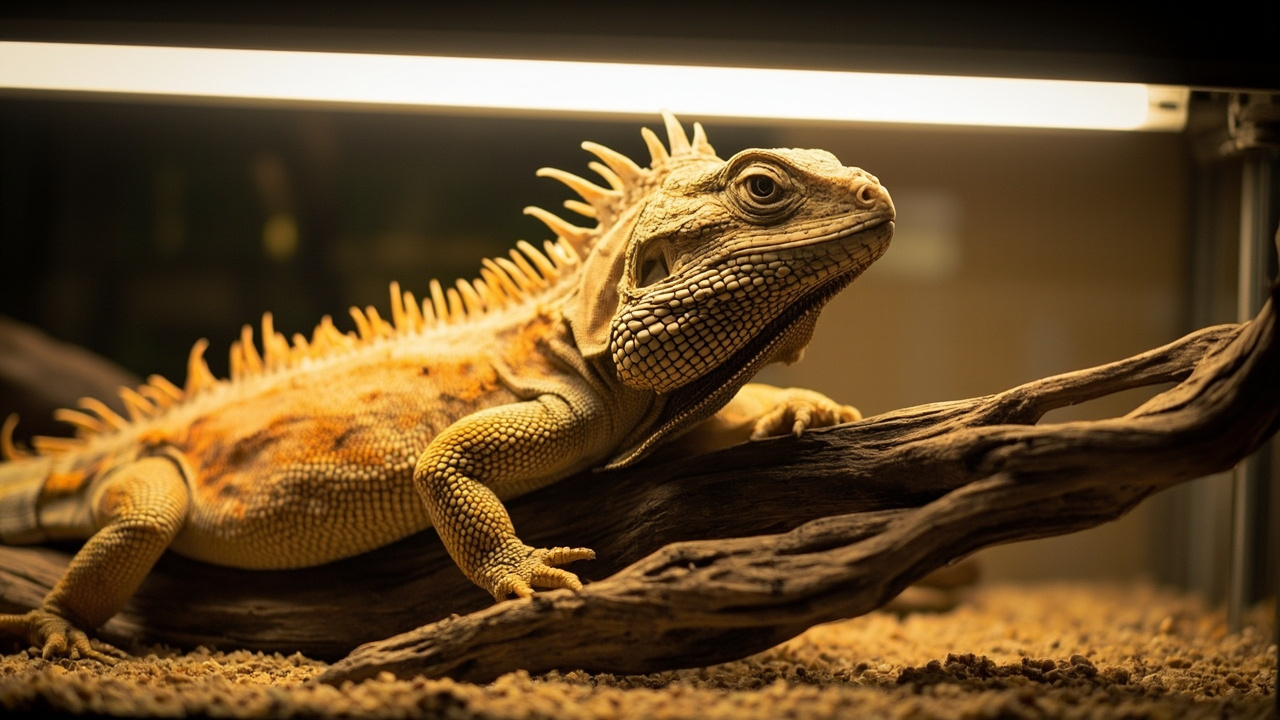
A T5 HO UVB fixture should span as much of the enclosure length as possible — ideally the full 48 inches for a 4-foot tank. Mount it inside the enclosure above the basking area, or on the mesh top with the bulb within 8–12 inches of the basking surface.
Replace the UVB bulb every 6–12 months even if it still lights up, because UVB output degrades over time. Pair this with the Setup Cost Calculator to budget for replacement bulbs alongside your initial purchase.
Supplies Checklist
Here’s what you need before bringing your dragon home:
- Enclosure — 120-gallon minimum (4’x2’x2’)
- Basking bulb + deep dome fixture
- T5 HO UVB fixture + bulb
- Two digital thermometers — one for the warm side, one for the cool side
- Basking platform or flat rock
- Cool-side hide
- Safe substrate (ceramic tile, paper towels, or reptile carpet)
- Food dish and water dish
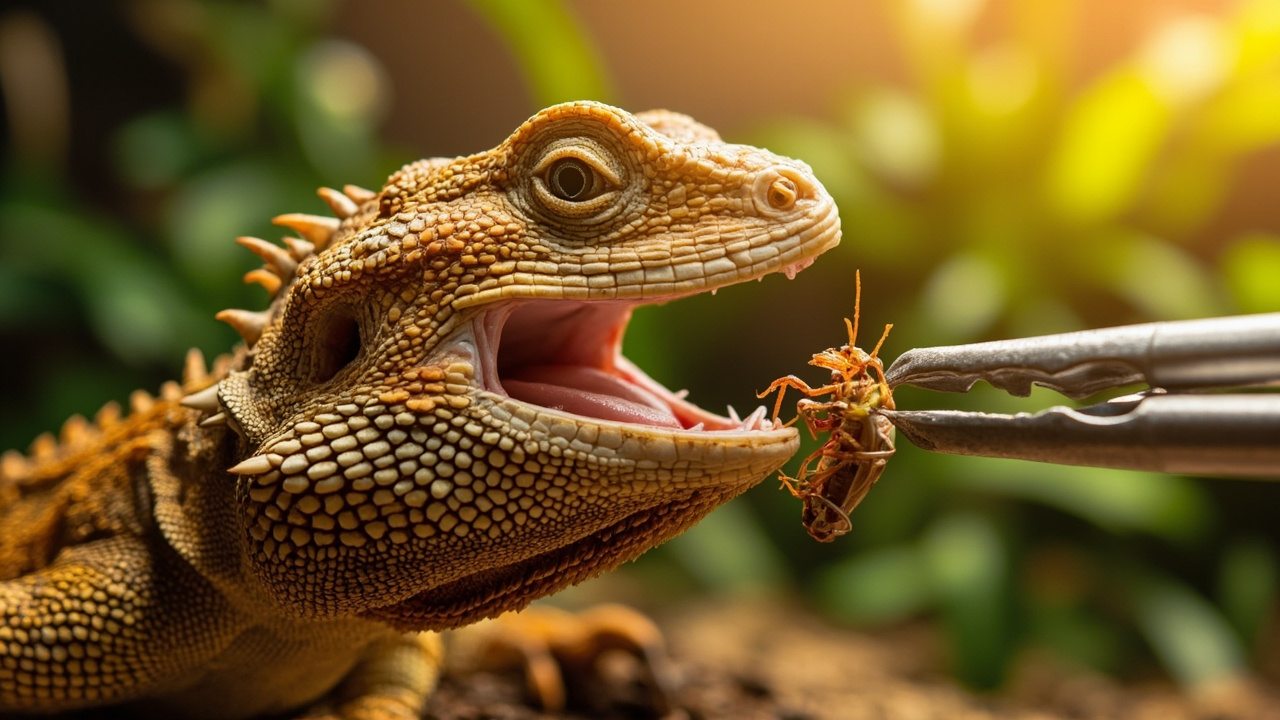
- Feeding tongs
The Vodolo Reptile Thermometer and Humidity Gauge 2-Pack ($5.99) covers both temperature zones with adhesive-mount digital hygrometers. Place one on the warm end near the basking rock and one on the cool end near the hide — accurate temperature monitoring is non-negotiable.
For diet specifics once the tank is ready, see the bearded dragon diet guide. If your dragon shows signs of stress after moving into a new enclosure, check our bearded dragon health resources for troubleshooting.
Where to Place the Tank in Your Home
A 120-gallon enclosure filled with substrate, decor, and a dragon easily exceeds 200 pounds. Use a purpose-built reptile stand or a solid wood dresser — flimsy TV stands and wire shelving will buckle.
Keep the enclosure away from windows. Direct sunlight through glass creates a greenhouse effect that can push internal temperatures past 120°F, which is lethal. Choose a low-traffic room corner so your dragon isn’t startled by constant movement. Proximity to an electrical outlet matters too — between the basking lamp, UVB fixture, thermostat, and any supplemental heat, you’re running multiple devices.